

A fake loan app scam involves fraudulent or unauthorised applications that impersonate legitimate lenders to steal personal information, collect advance fees or impose undisclosed loan charges. In India, these types of fake apps often attract borrowers through convincing advertisements on social media and messaging platforms about instant approval promises and minimal documentation. Once installed on a device or system, the fake loan app scams gain access to sensitive information, misuse identity documents and expose borrowers to some abusive recovery practices, including threats and blackmail.
These scams also create financial, operational and reputational risks for banks and NBFCs through identity theft, fraudulent loan applications and brand impersonation. In this blog, we will discuss how these scams operate. Plus, we will also explain how recognising their warning signs and strengthening digital fraud detection can help borrowers and lenders reduce these risks.
Key Takeaways
- Fake loan apps may make money through illegal upfront fees, misuse of personal data and threatening borrowers into making payments.
- Frequent requests for access to contacts, call logs, photos and messages are major warning signs of fake loan apps.
- Some illegal loan apps misuse borrowers' contact lists to threaten or harass their friends, family members and colleagues.
- Lenders catch these networks by linking devices, identities and behaviour across applications instead of reviewing each one alone.
- Victims should preserve evidence first, then call or report via 1930 or cybercrime.gov.in.
What Is a Fake Loan App Scam?
A fake loan app scam is a type of digital financial fraud in which criminals use fraudulent mobile applications to deceive people into sharing personal information, paying advance fees or accepting loans under deceptive terms. Such fake loan apps often promise instant loan approvals, minimise the documentation process and offer quick disbursal. Thus, these turn out to be appealing to people who need urgent financial assistance.
Once installed, some fraudulent loan apps request access to sensitive information, including contacts, photos, messages and device data. Scammers may misuse this information to steal identities, demand additional payments or threaten borrowers if they fail to meet unreasonable repayment demands.
How Do the Fake Loan App Scams Work?
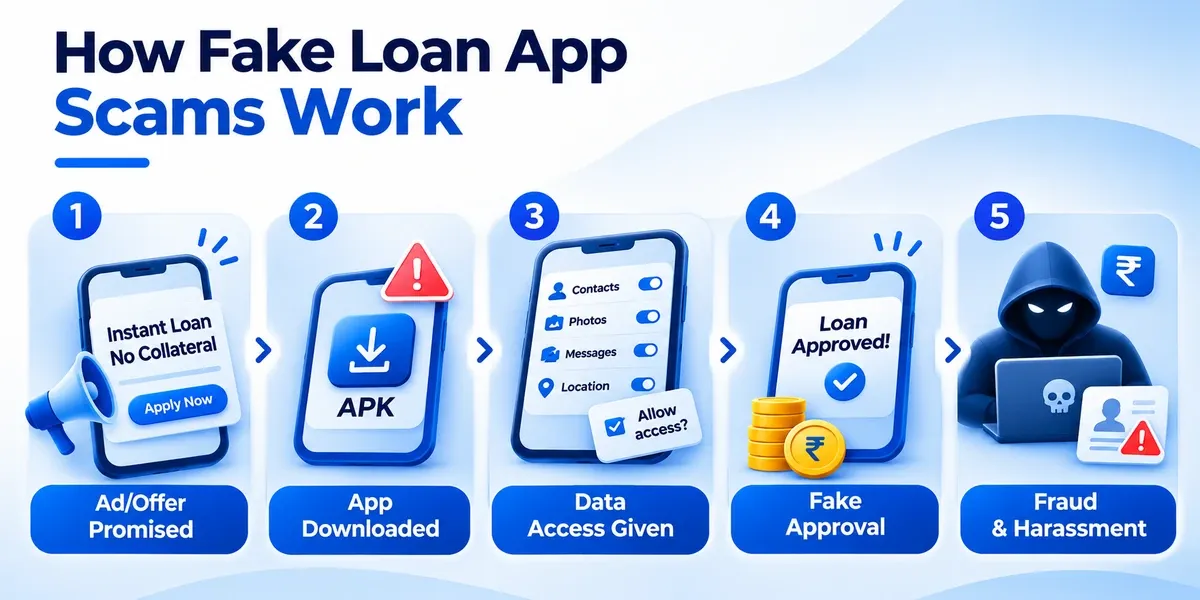
Fake loan app scams typically work by following five stages, starting with an attractive loan offer and progressing to personal data theft, fraudulent charges and borrower harassment. The steps are as follows:
-
The advertisement: It starts with a social media ad, SMS or Telegram message that promises instant loan approval with minimal documentation. Also, it offers no credit checks, which helps attract potential borrowers.
-
The download: Victims are encouraged to install an app through unofficial websites, APK files or messaging links. This is done to bypass the security checks of official app stores.
-
The data collection: The app requests access to contacts, photos, messages and location. It may also collect Aadhaar, PAN details and selfies under the pretext of KYC verification.
-
The financial trap: Victims may be asked to pay the processing or insurance fees before the final approval and disbursal of the loan amount. In other cases, they receive less than the promised loan amount, with undisclosed deductions and repayment conditions.
-
The pressure: Hidden charges and excessive repayment demands increase the amount the borrower actually owes. If borrowers delay payment or question the charges, fraudsters may resort to threatening calls, abusive messages and misuse of personal information.
How Can Lenders Detect Fake Loan App Fraud?
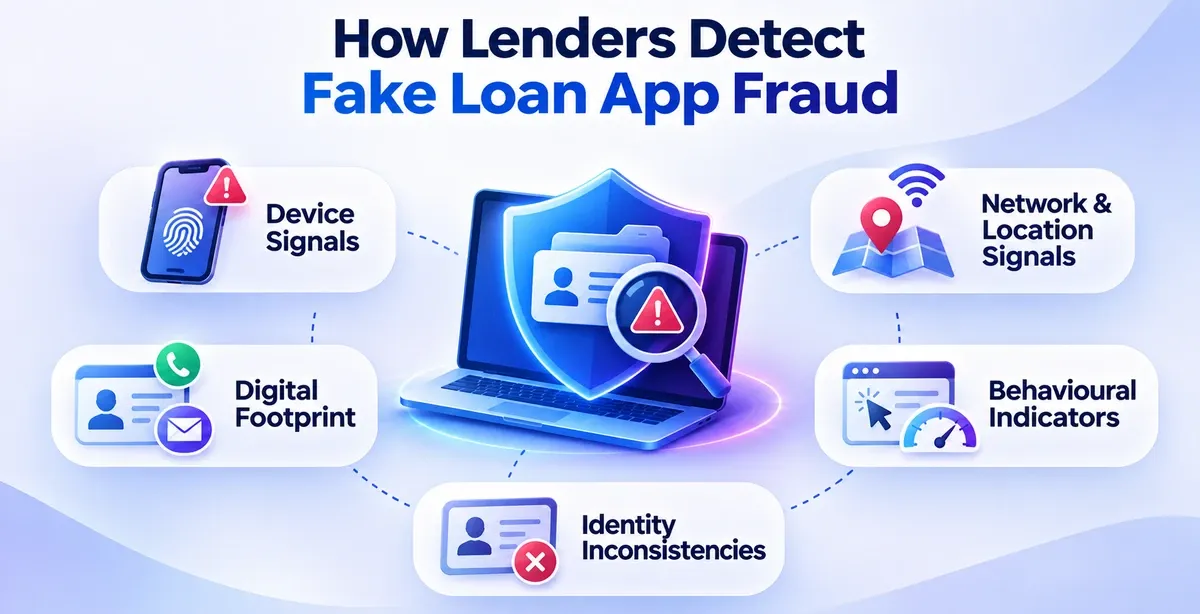
Lenders can detect fake loan app fraud by analysing and connecting signals across multiple applications rather than assessing each application independently. Five key signal categories can help identify suspicious applicants and coordinated fraud networks.
1. Device Signals
When multiple loan applications are made from the same device, this can indicate coordinated fraud. Fraudsters may use software that imitates a mobile phone, modified devices or multiple copies of the same loan app to submit applications using different identities. That’s why lenders should look for these as well.
2. Digital Footprint
Newly created phone numbers and email addresses with limited digital history may indicate some disposable identities. That’s why lenders should also check whether the available digital history aligns with the applicant's stated name, location and professional details.
3. Identity Inconsistencies
Differences in names, dates of birth, or addresses across loan applications, identity documents and credit bureau records may indicate an act of forged or synthetic identities. Repeated mismatches in data across multiple applications can reveal some common patterns associated with organised fraud.
4. Network and Location Signals
VPN usage, IP addresses that do not match the declared location and unusual location changes between multiple sessions may indicate attempts to conceal an applicant's actual origin. Multiple applications sharing an IP address or network connection also warrant further investigation.
5. Behavioural Indicators
Repeated copy-paste actions, scripted keystroke dynamics or typing patterns and unusually fast application form submissions may even indicate some automated applications or coordinated activity. Analysing how applicants type, swipe and navigate within the apps can help lenders distinguish natural user behaviour from suspicious interactions.
How Can Banks and NBFCs Prevent Fake Loan App Scams?
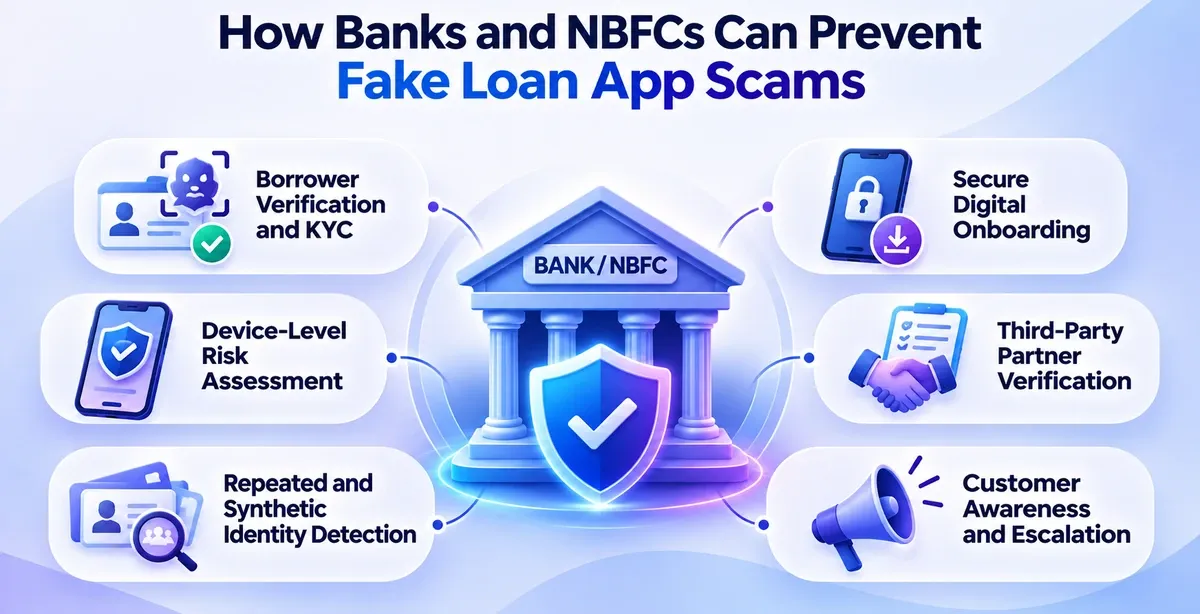
To prevent fake loan app scams, banks and NBFCs should strengthen borrower verification, assess device-level risks and conduct ongoing surveillance of suspicious application activity. A combination of these measures helps lenders identify fraudulent identities, detect organised fraud networks and protect genuine borrowers prior to loan disbursal.
1. Borrower KYC and Verification
Add identity document verification and liveness detection to confirm the applicant is a real person and they own the phone number and bank account. Also, this approach rules out the scope for fraudsters to use stolen documents, a common route to take a loan approval in the name of a victim.
2. Device Level Risk Assessment
See if there are multiple loan applications from the same device even if the applicants are using different names, phone numbers or identity details. Such patterns may be signs of fraud rings working together and may trigger additional verification.
3. Detection of Synthetic Identities
Benchmark individual identity attributes across your entire applicant pool. Search for common phone numbers, addresses or photos among applicants with different names; this is a sign of a false identity or a fraud ring.
4. Digital Secure Onboarding
Protect your own app from being tampered and cloned. Publish its official download links. This reduces the chances of an illegal loan app passing the application as yours.
5. Third Party Partner Validation
Vet the lending service providers and collection agents before pre-boarding. Audit their conduct post-boarding. This gives a clearer picture of the way partners treat borrowers, including recovery practices.
6. Customer Awareness and Escalations
Let the borrowers know about your apps, websites and phone numbers and warn them against any kind of fake or impersonation. Give fraud detection teams a clear path for escalating suspicious cases, so a complaint about a fake loan app lands on the right desk quickly.
8 Common Types of Fake Loan App Scams
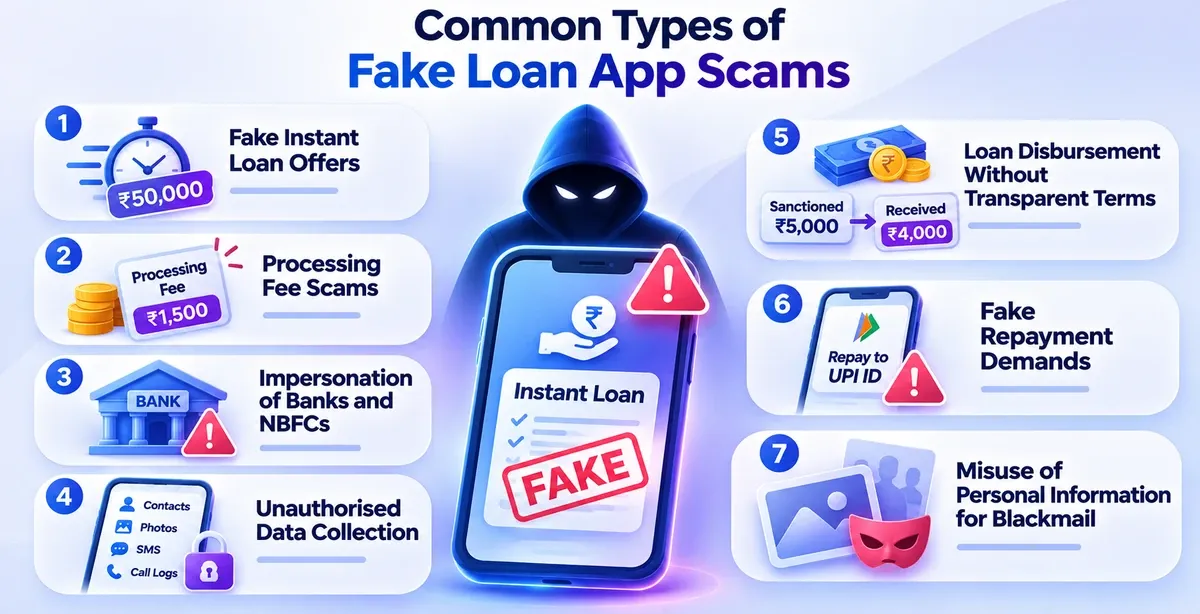
Fake loan apps use different tactics to deceive borrowers, steal personal information and collect money through fraudulent lending practices. Understanding these common scam methods can help you recognise suspicious activity and avoid financial losses or loan app harassment.
1. Fake Instant Loan Offers
An ad shows "Get ₹50,000 in five minutes, no CIBIL check". The offer exists only to get you to install the app and hand over data. The amount promised is usually larger than any genuine lender would approve without income or credit checks, which is the first sign of a fake loan app.
2. Processing Fee Scams
After "approval", you are asked to pay ₹1,500 for processing, GST or insurance. Once you pay, the loan never arrives, and a new fee appears. This is the simplest loan app scam, because it needs no lending at all, only a payment you make willingly.
3. Impersonation of Banks and NBFCs
The app borrows a real lender's logo or uses a near-identical name, backed by cloned websites and social media pages. You assume a regulated institution stands behind it. In reality, these illegal loan apps have no connection with the lender they copy.
4. Unauthorised Data Collection
The app reads your contacts, gallery, SMS and call logs far beyond what identity verification needs. This data is the real product. They can use it for harassment, pass it to other fraud operators, or use it to apply for loans in your name.
5. Loan Disbursement Without Transparent Terms
Suppose you get ₹4,000 on a sanction of ₹5,000, and the interest and fees are told only when the money is credited to your account. A genuine lender provides a clear statement outlining the loan's interest rate, fees and total repayment amount before disbursement. Fake loan apps may hide these details, disclose charges only after disbursement or misrepresent the actual cost of borrowing.
6. Fake Repayment Demands
Collectors usually claim you owe money that you never borrowed, or even ask you to repay a personal UPI ID instead of the lender's account. Genuine repayments usually go to the lender's account, so a request to repay to a personal account should end the conversation.
7. Misuse of Personal Information for Blackmail
Your photos and contacts get exposed to fraudsters. A morphed image reaches your family unless you pay, sometimes even after you have repaid the loan. This is the point where a loan app scam turns into loan app harassment.*
What Is Loan App Harassment and How Does It Happen?
Loan app harassment occurs when fraudulent lending operators misuse borrowers' personal information to threaten, intimidate or shame them into making payments, regardless of whether the amount is actually owed. It often begins when an app collects access to contacts, photos and messages during installation.
Common loan app harassment tactics include:
Abusive calls and threats: Recovery agents repeatedly call borrowers, use abusive language and threaten consequences over delayed or disputed repayments.
Contacting family and friends: Fraudsters use stolen contact lists to message relatives, friends and employers, often labelling borrowers as fraudsters or defaulters.
Misuse of personal photographs: Some operators circulate fake images or threaten to share private photographs in group chats to pressure borrowers.
Unfair settlement demands: Fraudsters demand additional payments unrelated to the original loan. This often harasses borrowers even after receiving money.
Psychological intimidation: Repeated threats and public shaming create emotional distress and discourage victims from reporting the incident.
Such coercive recovery practices are unlawful, and RBI-regulated lenders must follow applicable fair recovery practices when communicating with borrowers.
8 Major Warning Signs of Fake or Illegal Loan Apps
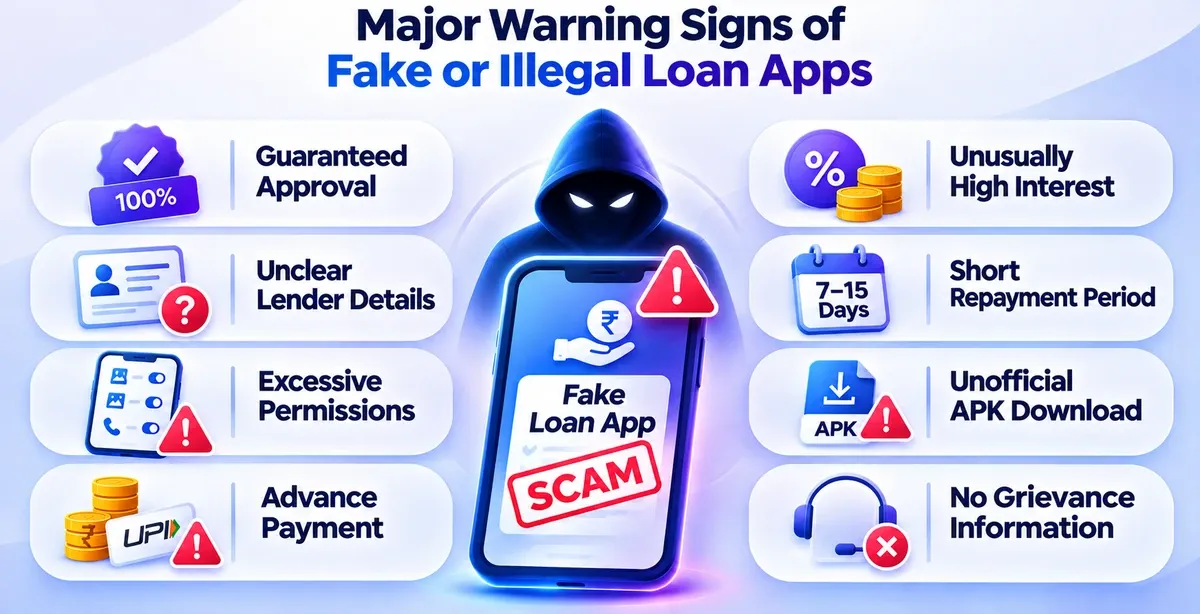
Fake or illegal loan apps often use misleading promises, hidden charges and unauthorised data collection to deceive borrowers. That’s why recognising these warning signs can help you identify suspicious lending applications before sharing personal or financial information.
| Warning Signs | What These Signs Look Like |
|---|---|
| Guaranteed approval | Promises such as "100% approval" without assessing income, credit history or repayment capacity. |
| Unclear lender details | No information about the associated bank or NBFC, registered business address or lender credentials. |
| Excessive permissions | Requests access to contacts, photos, call logs or messages that are unnecessary for loan processing. |
| Advance payment | Demands processing, insurance or verification fees before releasing the loan, sometimes through a personal UPI ID. |
| Unusually high interest | Imposes excessive interest rates or additional charges that are not clearly disclosed before loan acceptance. |
| Short repayment period | Requires borrowers to repay the entire amount within an unusually short period, sometimes just 7–15 days. |
| Unofficial APK download | Encourages installation through WhatsApp, SMS or third-party links instead of verified official download channels. |
| No grievance information | Does not provide a customer support contact, grievance redressal mechanism or details of the responsible lending institution. |
Swipe the table
Why Are Fake Loan Apps a Concern for Banks and NBFCs?
Fake loan apps create financial, operational and reputational risks for banks and NBFCs, even when these institutions have no direct involvement in the fraud. The major concerns include:
-
Identity theft and fraudulent applications: KYC documents collected through fake apps can be reused to submit loan applications to legitimate lenders. Since the documents contain some genuine identity details, confirming through basic verification checks may not always detect the misuse.
-
Financial losses: Fraudulent loan disbursals can result in defaults, write-offs and additional recovery costs for banks and NBFCs.
-
Customer disputes: Individuals whose identities have been stolen may have to dispute loans they never applied for, increasing complaint volumes and investigation workloads.
-
Brand impersonation: Fraudsters copy the names, logos and branding of established lenders to make unauthorised apps appear legitimate.
-
Reputational damage: Fraudsters impersonating legitimate lenders can damage their reputation. This happens because borrowers may blame the genuine institution for financial losses or abusive recovery practices.
What Should Borrowers Do If They Fall Victim to a Fake Loan App?
If you become a victim of a fake loan app scam, it is necessary to act quickly to limit further misuse of your personal and financial information. Also, it is advisable to preserve available evidence, restrict the app's access and report the incident through the appropriate channels. Follow these steps:
-
Preserve evidence: Take screenshots of threatening messages, call logs, app screens, payment receipts and other communications that may support your complaint.
-
Revoke app permissions: Remove the application's access to your contacts, photos, messages and other phone resources before uninstalling it.
-
Secure your financial accounts: Contact your bank immediately if you have shared a card, net banking or other sensitive financial details. Change compromised passwords and PINs.
-
Report the cyber fraud: Call India's cybercrime helpline at 1930 or submit a complaint through cybercrime.gov.in.
-
Report unauthorised lending activity: Submit a complaint through RBI's Sachet portal if you suspect an unauthorised lending operation.
-
Inform your contacts: Warn family members, friends and colleagues about potential fraudulent messages or calls made using your information. Ask them to preserve any suspicious communications they receive.
Stay Ahead of Fake Loan App Scams with Smarter Fraud Detection
Fake loan app scams exploit stolen identities, compromised personal data and gaps in digital verification. While borrowers must verify the lenders and avoid suspicious apps, banks and NBFCs need much stronger capabilities to identify organised fraud before final disbursal. Sign3 Device Intelligence helps lenders connect multiple applications to shared devices, uncover repeat fraud patterns and identify suspicious networks operating through seemingly unrelated identities.
By revealing device-level links that conventional KYC checks may miss, our Device Intelligence enables lenders to strengthen onboarding decisions, detect coordinated fraud earlier and protect genuine borrowers. Explore how you can help strengthen your digital lending fraud prevention strategy.
FAQs
What is a fake loan app scam?
A fake loan app scam is an unauthorised application that usually pretends to be a legitimate lender or operates without proper authorization. Fraudsters use such apps to trick potential borrowers into lending money. These apps may promise instant loan approval, but they do collect advance fees, steal your personal information and even charge you hidden charges.
How can I identify an illegal loan app in India?
Check whether the app is associated with an RBI-regulated bank or NBFC and verify the lender's details through RBI's public directory of digital lending apps. A legitimate lending process should provide transparent loan terms through a Key Fact Statement and clear grievance redressal details. Requests for excessive phone permissions, upfront payments, unrealistic approval promises and downloads through unofficial APK links are potential warning signs.
Can fake loan apps access my contacts and photos?
Yes. Fake loan apps may request access to your contacts, photo gallery, call logs and other personal information during installation. Once this data is collected, fraudsters may misuse it for blackmail, identity theft or harassment. RBI's digital lending guidelines restrict regulated lending apps from accessing mobile phone resources such as contact lists and call logs. Therefore, unnecessary permission requests should be treated as a warning sign.
What should I do if a fake loan app is harassing me?
If a fake loan app is harassing you, preserve evidence such as threatening messages, call records, payment receipts and screenshots before uninstalling the application. Revoke its permissions through your phone settings and contact your bank immediately if you have shared sensitive financial information. Report financial cyber fraud by calling helpline 1930 or visiting cybercrime.gov.in. You can also inform RBI through its Sachet portal if the app is operating as an unauthorised lending entity.
How can I check whether a loan app is associated with an RBI-regulated lender?
To check whether a loan app is associated with an RBI-regulated lender, start by visiting the RBI's official website and check its public directory of digital lending apps to identify the bank or NBFC associated with the application. Cross-check the lender's name and registration details. Also, verify the app's official download link through the lender's website and review its loan terms or any crucial information before sharing personal documents.
How does Device Intelligence help banks and NBFCs detect fake loan app fraud?
Sign3’s Device Intelligence layer helps lenders to detect and identify multiple loan applications that originate from the same device, even when applicants use different identities to get approval for the loans. By uncovering shared devices and suspicious connections, it helps fraud teams detect coordinated fraud rings before loan disbursal.


