

Behavioural Biometrics for Real-Time Fraud Detection in Digital Banking
Behavioural biometrics is emerging as the most effective approach to real-time fraud detection, addressing account takeover attacks, social engineering scams, money mule networks, and user coercion — areas where passwords, OTPs, and MFA consistently fail. In 2025, digital fraud is no longer about breaking systems. It’s about manipulating people. And behaviour is the only signal that exposes intent inside a live session.
Behavioural Biometrics as the Missing Layer in Digital Trust
For decades, fraud prevention has chased credentials
- Passwords became PINs.
- PINs became OTPs.
- OTPs became multi-factor authentication.
Yet fraud has not declined, it has industrialized
In 2025, companies around the world reported fraud losses totaling an estimated USD 534 billion, equivalent to 7.7% of the average company’s annual revenue (TransUnion H2 2025 Global Fraud Report).
Despite layered authentication, financial institutions continue to lose billions, not because controls are weak, but because they are misaligned with how modern fraud actually works.
The uncomfortable truth is this: Credentials were never designed to prove intent. They only prove access. And in today’s digital ecosystem, access is cheap, transferable, and endlessly reproducible. Behaviour, on the other hand, is not.
Why Credentials Fail in Modern Fraud Prevention
The Structural Weakness of Credentials
Credentials fail not because they are poorly implemented, but because they are external to the human.
- A password is knowledge
- An OTP is possession
- A device ID is an object
All three can be:
- Stolen
- Shared
- Bought on dark markets
- Automated at scale
- Replayed across sessions
By 2025, over 80% of confirmed account takeover (ATO) incidents globally involve stolen or compromised credentials, underscoring that fraudsters no longer need to brute-force systems, they simply exploit existing access rights[ (WiFi Talents, 2025).
This is why even the most advanced digital fraud prevention stacks struggle to detect:
- Automated bot and scripted attacks
- Social engineering scams
- Account takeovers from legitimate devices
- Money mule networks operating across institutions
In every case, the system sees valid credentials, but invalid intent.
Why Fraudsters Can Steal Credentials but Not Behaviour
Behaviour Is Not an Identifier — It is a Signal of Intent Behavioural biometrics represents a fundamental shift.
It does not ask:
“Is this the right password?”
It asks: “Does this interaction make sense for this human, right now?”
That distinction changes everything.
Behavioural biometrics analyses micro-behaviours that are:
- Unconscious
- Continuous
- Context-dependent
- Extremely difficult to rehearse or reproduce
These include:
- Natural pauses and hesitation
- Consistency in typing, scrolling, or tapping
- Familiarity with the app or website flow
- Behaviour during errors or interruptions
- Comfort entering personal or financial information
A fraudster may know what to enter, but not how a genuine user arrives there.
Why Fraudsters Can’t Fake Behaviour — Even with AI
A growing misconception is that AI-driven fraud will soon “learn” behaviour. In reality, behaviour is non-deterministic.
Even the same person behaves differently across:
- Devices
- Emotional states
- Risk scenarios
- Cognitive load conditions
Behavioural biometrics does not rely on static profiles. It models ranges, transitions, and deviations.
This makes:
- Replay attacks ineffective
- Scripted automation conspicuous
- Remote access tools detectable
Crucially, Behavioural systems ignore identity and focus on one question: does this behaviour align with a real human?
This is why intent-based fraud detection succeeds where identity-centric systems fail.
Detecting Social Engineering Scams in Real Time
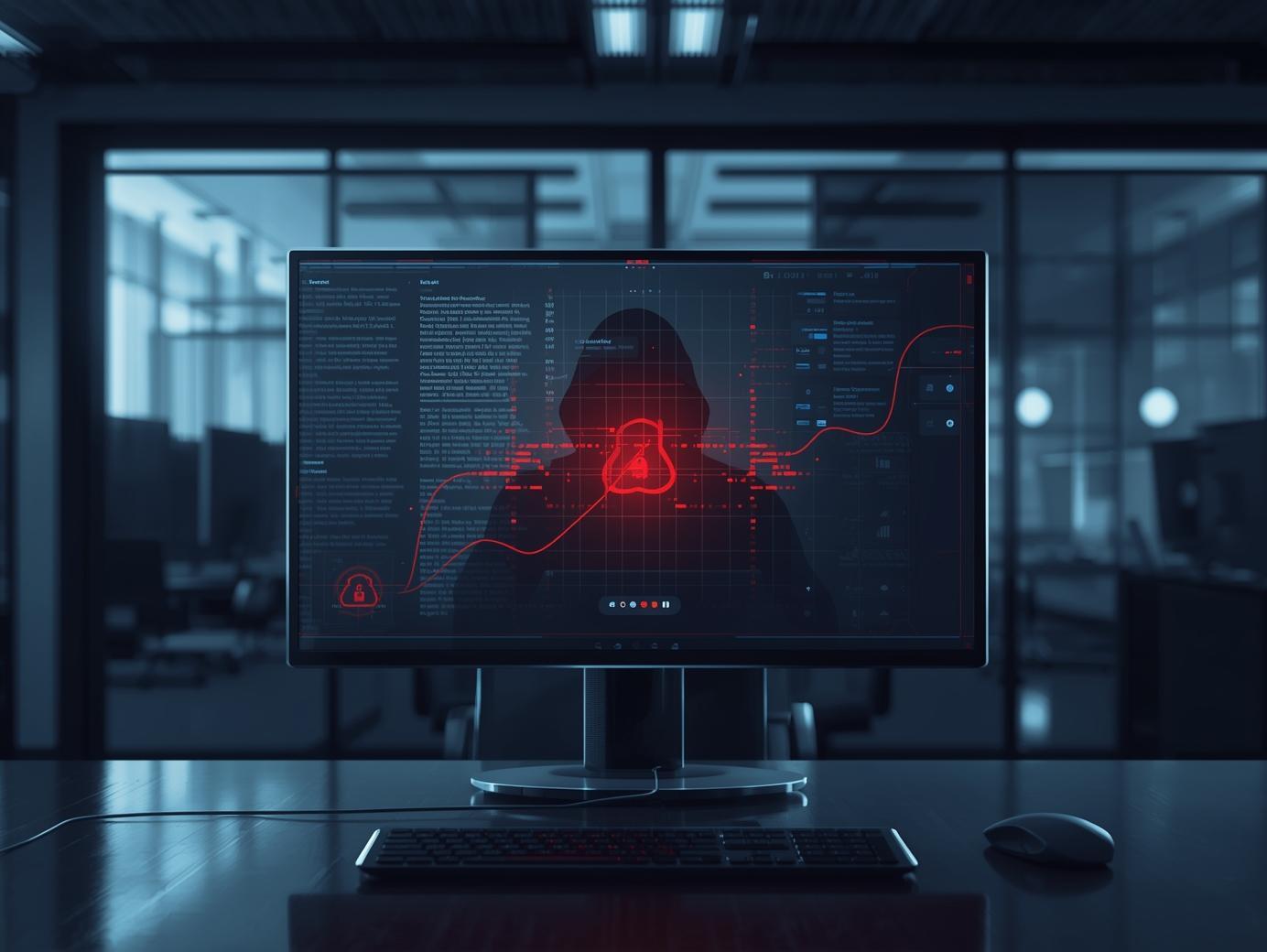
Duress Detection: Protecting Users Under Coercion
Behavioural biometrics enables real-time detection of fraud and user manipulation, even under valid authentication.
Even when:
- Credentials are correct
- Devices are trusted
- Locations are normal
- Transactions are authorised Behaviour can reveal stress, coercion, or manipulation.
Behavioural biometrics monitors signals such as:
- Fragmented or uneven typing
- Abnormal session pacing
- Hesitation or repeated deletions
- Cognitive overload patterns
- Instruction-following anomalies
- Unusual navigation behaviour
Case Story: Executive Coercion Prevented

A mid-sized fintech noticed unusual behavioural patterns during a high-value transaction by a senior executive. Credentials, device, and location were all normal.
Behavioural biometrics detected extreme inconsistencies in mouse movement and navigation. Investigation revealed the executive was being coerced over a video call.
- The transaction was paused
- Security teams were alerted
- The fraud was prevented
- No credential failed
- Behaviour exposed intent
Behavioural Biometrics Use Cases in Digital Banking
Case Story: When Everything Looked Right — Except the Behaviour
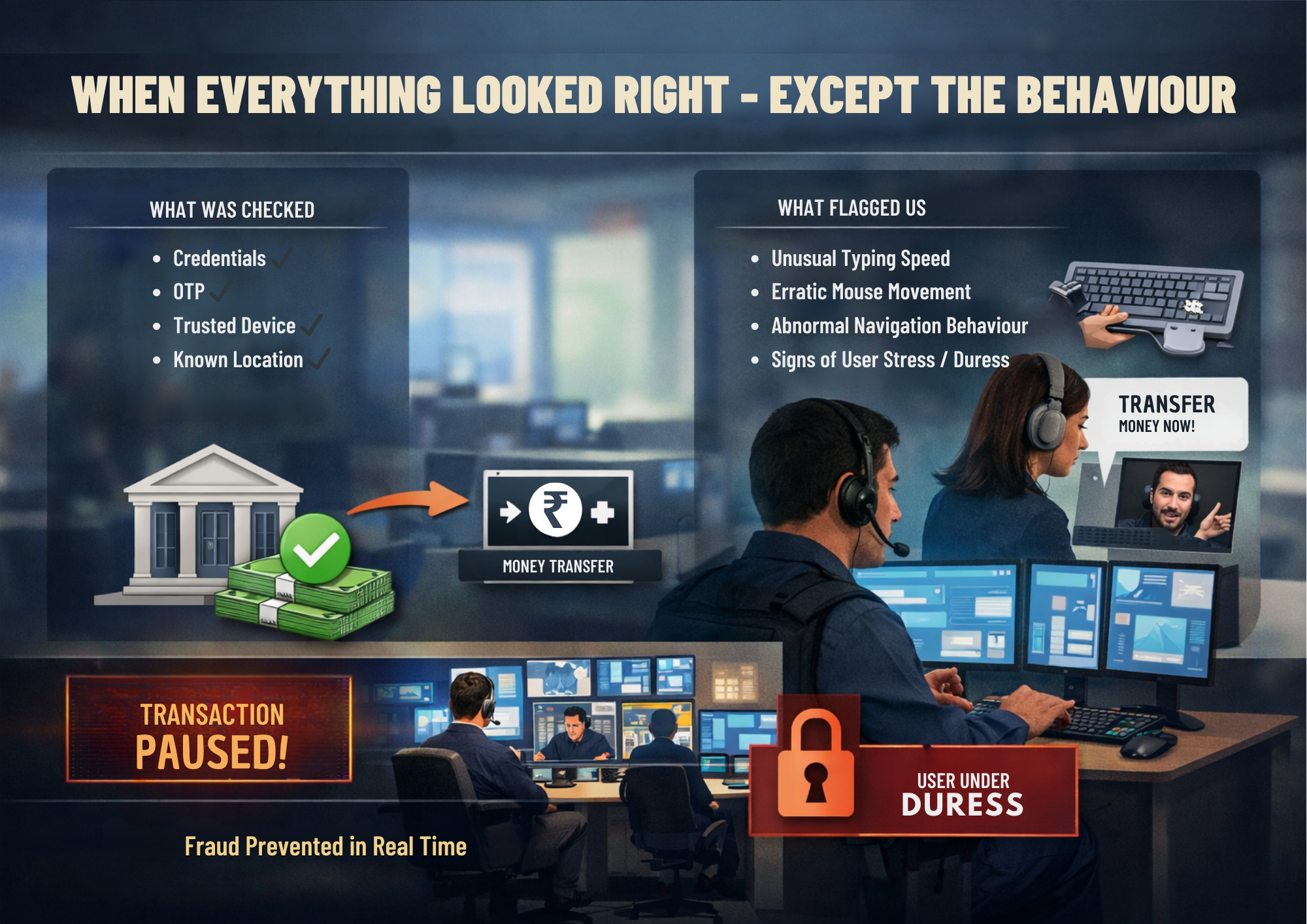
Tira, a long-time digital banking customer, logged in.
- Same phone.
- Same city.
- Same credentials.
She initiated a high-value transfer. From the bank’s perspective:
- Login: valid
- OTP: verified
- Device: trusted
- Location: normal
But behaviour told a different story. Tira paused longer than usual. Her typing became uneven. She deleted and re-entered information. She was on a phone call — pressured, rushed, manipulated. The system introduced a contextual pause. The transfer was held. The call ended. The fraud was stopped. The login was legitimate. The behaviour was not.
How Banks Detect Money Mule Networks Using Behaviour
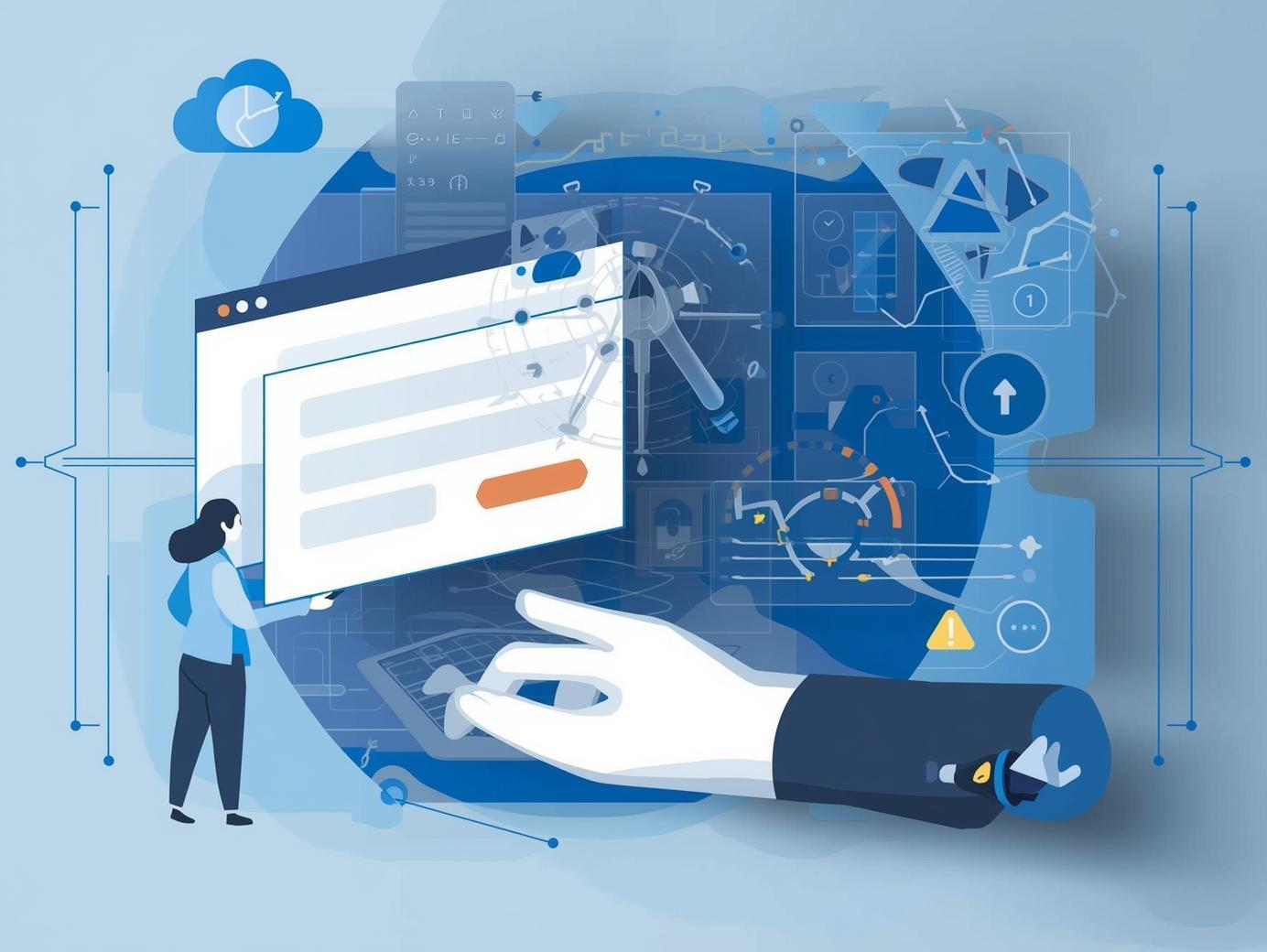
Money mules expose the limits of identity-based fraud controls.
Mules rotate:
- Accounts
- Devices
- IPs
- Credentials But they do not rotate behavioural fluency.
Behavioural biometrics detects:
- Over-familiarity with onboarding flows
- High operational efficiency inconsistent with new users
- Non-intuitive data entry
- Expert-level navigation patterns
In 2025, law enforcement uncovered 1.9 million mule accounts, with mule-related fraud growing over 20× faster than other fraud types (Finextra,Moneyco)
Intent-Based Security and Digital Trust Architecture
The most important shift behavioural biometrics enables is philosophical. It moves institutions from:
“How do we stop fraud?”
_to_
“How do we allow trust safely?”
This matters because:
- Digital growth requires reduced friction
- False positives destroy customer trust
- Regulators increasingly demand proportional, explainable controls
Behavioural biometrics enables:
- Continuous authentication
- Selective intervention
- Lower false positives when used with device intel & digital footprint.
- Strong privacy alignment (no PII storage)
Takeaway: Behaviour Is the Only Signal That Scales with Risk
- Credentials break at scale.
- Rules fail at scale.
- Manual review collapses at scale.
- Behaviour improves at scale.
Fraudsters will continue to steal credentials. They will manipulate people. But they will not become their victims.
The future of fraud prevention is not about proving identity. It is about understanding behaviour.
FAQs – Behavioural Biometrics & Fraud Detection
What is behavioural biometrics?
Behavioural biometrics analyses how users interact with digital systems to assess intent in real time.
How is behavioural biometrics different from traditional authentication?
Traditional authentication verifies access. Behavioural biometrics verifies intent.
Can behavioural biometrics detect social engineering fraud?
Yes. It identifies hesitation, pressure-driven behaviour, and manipulation during live sessions.
How does behavioural biometrics prevent account takeover attacks?
By detecting behavioural inconsistencies even when credentials and MFA succeed.
Is behavioural biometrics privacy compliant?
Yes. It operates on anonymised behavioural signals without storing PII.


